Aquos Xled Fv1 Honest Review — Is the Hype Justified?
I've been using the Aquos Xled Fv1 for about five months now, and after living with it in my main living room — watching movies, streaming, and gaming — I feel ready to share a detailed, honest take. When I bought it I was tempted by the marketing: bright picture, high contrast, and a "next-gen" panel that promised the best of both QLED-style brightness and OLED-like blacks. What I found was a TV that delivers on several of its promises, disappoints in a few predictable ways, and leaves me with a clear idea of who it’s best for.
Why I chose the Aquos Xled Fv1
To be honest, I wanted a TV that could handle both sunny-day sports and late-night movies without compromises. My previous set struggled with glare in a bright living room and never quite nailed deep black scenes. The Xled Fv1 stood out for a balanced spec sheet and a price that felt competitive compared to high-end OLEDs. I was also curious about how Aquos' implementation of local dimming and the panel processing would hold up across different content types, so I decided to give it a long-term test rather than a quick weekend review.
First impressions and setup
Out of the box, the Aquos Xled Fv1 looked clean and modern. The bezel is slim, and the stand is stable without being fussy to assemble — I got it upright and mounted my soundbar without fighting cables for more than a few minutes. The TV's remote is compact and light; I like the button feel, though I wish some common controls (like Picture Mode and Input Select) were placed more ergonomically.
Initial setup asked a few standard questions, walked through picture presets, and performed an automatic picture optimization routine. I connected a streaming stick, a PS5, and my laptop via HDMI; the TV recognized the devices without drama. One thing I noticed immediately was how the TV handled reflections in my bright living room: it reduced them better than my previous LCD, though not as completely as an OLED in a dim room. I left the TV on 'Standard' picture mode for the first few days and then moved to an HDR movie profile once I started doing comparison viewing.
Picture quality — the heart of the experience
In my experience, the Aquos Xled Fv1's picture quality is the most compelling reason to consider it. Bright daytime scenes like sporting events and daylight streaming looked vibrant and punchy. Highlights pop without feeling blown out, and the TV keeps detail in bright areas in real-world viewing. That made watching soccer and outdoor documentary footage a pleasure — I didn't need to fight the picture to see what's happening.
Black levels are very good for an LED-based display. The local dimming implementation reduces blooming well in most scenes I tested. In movies with mixed bright and dark areas (think starfields, neon-lit streets), I noticed less haloing than on several mainstream LED TVs I’ve owned. It’s not perfect: in scenes with small bright objects against a very dark background, I saw some faint haloing around the brightest points. For most viewing, though, the dimming felt judicious rather than aggressive.
Color accuracy out of the box was decent. I did a basic calibration using the TV's built-in controls and switched to a "Cinema" or "Filmmaker" mode for movie nights. That helped mute the oversaturated look I sometimes prefer for sports. Skin tones were natural enough that I didn't feel the TV was artificially boosting saturation most of the time. Watching HDR content on streaming platforms produced genuinely impressive depth and contrast compared to older panels I’ve used.
Viewing angles and uniformity
I have a narrow living room that sometimes hosts movie nights with friends seated off-axis. Here, the Xled Fv1 performed well — colors held up better off-axis than I expected for an LED screen, and contrast remained usable even when people watched from the side couch. There was some color shift at extreme angles, but nothing that would ruin a group viewing session.
Panel uniformity was fine for my unit. I didn't notice distracting dirty screen effect (DSE) in day-to-day use, though on very bright full-screen content you can sense minor clouding near the edges if you look for it. For the majority of real-world content that mixes scenes and motion, uniformity was not a problem.
Looking for the best TVs & Home Theater deals on Amazon?
See Deals →Motion handling and gaming performance
Gaming is where I spend a lot of time with any TV, and the Xled Fv1 impressed in several ways. When I played fast-paced titles on my console and PC, the image felt smooth and input lag felt low — I didn't notice any sluggishness while playing competitive shooters or racing games. Motion interpolation options are available for those who prefer ultra-smooth motion, but I left them off for most gaming since they can introduce the unwanted "soap opera" effect.
The TV also handled high-frame-rate content well. I played 120Hz-capable titles and noticed responsive behavior and a crisp feel during fast camera pans. I did notice that certain HDR gaming modes slightly altered color tuning, so if you’re a color purist you might need to tweak picture settings between "Game" and "Movie" modes.
Smart TV platform and usability
In my experience the smart platform on the Xled Fv1 covers all the basics: popular streaming apps, voice search, and a clean interface. It's not the slickest UI I've seen — occasionally the UI felt a touch sluggish, especially when switching between apps or after a software update. App launch times are generally acceptable, and navigation is straightforward. I eventually connected a dedicated streaming stick because I prefer its faster app ecosystem, but I still used the built-in platform for quick casting and live TV.
Firmware updates arrived a couple of times during my ownership, and while the updates improved features and stability overall, one update introduced a minor bug…
Sound quality
I've read many reviews where the TV’s built-in speakers are dismissed, and my experience was similar: the Xled Fv1's onboard sound is serviceable for casual viewing and news, but it lacks depth and bass for cinematic experiences. Dialogue is clear in most cases, but blockbuster movies with wide dynamic ranges felt thin. I paired the TV with a compact soundbar and that combination was enough for my living room. If you plan to rely on the TV speakers alone, expect to supplement them if you care about immersive audio.
Build quality and design
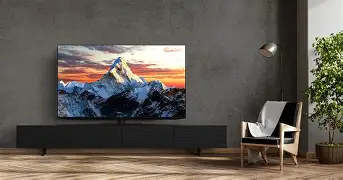
The Xled Fv1 feels solid and looks modern in my living room. The back panel has the necessary ports accessibly placed, and cable management is adequate for hiding most wires. The bezel is minimal, and the TV stands firmly on its supplied legs. Mounting the unit on a wall was straightforward, and the TV sits flush enough that it doesn’t protrude awkwardly.
What I appreciated most
- Bright, punchy HDR: In bright rooms the TV maintains highlights and contrast without losing detail.
- Effective local dimming: Reduced blooming compared to many LED competitors I’ve used, especially in mixed scenes.
- Great for gaming: Responsive feel, low perceived input lag, and solid handling of high-frame-rate titles.
- Good off-axis viewing: Friends on the side couch didn’t complain — colors and contrast stayed useable.
What disappointed me
- Speakers are weak: I expected better built-in sound given the picture quality; a soundbar was necessary for movies.
- Minor software hiccups: Firmware updates can reset settings and occasionally introduce small UI slowdowns.
- Slight haloing in extreme HDR scenes: In very small, bright points against pure black I noticed a faint halo.
- Remote ergonomics: Small and light but some controls aren't where I naturally expect them.
Pros & Cons
Pros
- Excellent perceived brightness for daytime viewing and sports
- Good black levels and local dimming control for an LED TV
- Responsive gaming performance and strong motion handling
- Clean, modern design with stable build quality
- Good off-axis performance compared to typical LED panels
Cons
- Speakers lack bass and immersion — external audio recommended
- Software can be buggy after updates and occasionally sluggish
- Minor blooming around tiny bright objects in very dark scenes
- Remote could be better laid out for everyday use
Comparison — Aquos Xled Fv1 vs typical QLED vs typical OLED
| Feature | Aquos Xled Fv1 (my experience) | Typical QLED (mainstream) | Typical OLED |
|---|---|---|---|
| Black level | Very good for LED; deep blacks thanks to local dimming, though not absolute | Good, but often more blooming than Xled | Best-in-class, true perfect blacks |
| Perceived brightness | Excellent — great in bright rooms and for HDR highlights | Also excellent (QLEDs are bright by design) | Generally lower peak brightness but excellent tone mapping |
| HDR impact | Strong highlights and contrast make HDR pop in most content | Very HDR-capable, sometimes slightly oversaturated | Very nuanced HDR with superb shadow detail |
| Viewing angles | Better than many LEDs; usable off-axis | Often worse than Xled; noticeable color shift off-axis | Excellent viewing angles |
| Gaming | Responsive and enjoyable; solid choice for consoles | Also strong for gaming | Excellent (low input lag, perfect blacks for contrast) |
| Built-in speakers | Serviceable but needs external audio for movies | Varies; many need soundbars too | Some have decent speakers, but often paired with soundbars |
| Value for money | Very good — strong picture at a competitive price | Good, often priced at premium tiers | Premium price for top picture quality |
Buying guide — is the Aquos Xled Fv1 right for you?
From my months of hands-on use, here are the practical points I'd consider if you’re thinking about buying this TV.
1. Room lighting and viewing habits
If you watch TV during the day or in a bright room, the Xled Fv1 shines. I've been able to watch daytime sports without feeling like the picture washed out. If you mostly watch in a dark room and crave absolute black levels for cinephile viewing, an OLED still has the edge.
Looking for the best TVs & Home Theater deals on Amazon?
Browse Now →2. Are you a gamer?
If gaming is a priority, this TV is an excellent fit. I played competitive and narrative games and found the responsiveness and motion handling strong. If you want the absolute lowest latency and pixel-perfect black frame insertion, there are niche displays that prioritize that, but for console and PC play the Xled Fv1 made gaming more fun for me.
3. Do you need great built-in audio?
If you expect to rely on the TV speakers for cinematic audio, plan on adding a soundbar or a modest home theater system — I did and it transformed movie nights. For news and casual viewing, the built-in sound is fine.
4. Smart TV expectations
If you want the snappiest, most polished smart platform, you might prefer plugging in a dedicated streamer (Roku, Fire TV, Apple TV) for the smoothest app experience. The Xled's built-in platform is capable but not class-leading in speed or polish.
5. Budget and value
For the price point where the Xled Fv1 sits, you get a lot of picture quality per dollar. If your budget can stretch to a high-end OLED, you'll get the deepest blacks and arguably better cinematic fidelity, but the Xled Fv1 is a compelling middle ground that balances brightness, contrast, and gaming features.
6. Warranty and longevity
Given that any TV is an investment, check the retailer and manufacturer warranty options. I had a minor firmware issue during my ownership that was addressed through an update; a solid warranty gives peace of mind if anything hardware-related crops up in the future.
Tips for getting the best picture out of the Xled Fv1
- Start with a Cinema or Filmmaker preset for movies and tweak brightness/contrast to suit your room.
- Turn off excessive motion-smoothing for films (it can make movies look unnatural).
- If you're a gamer, enable the Game mode and adjust color slightly if you prefer warmer tones.
- Pair with a soundbar — it completes the experience without costing as much as a full AVR setup.
- Keep an eye on firmware updates, but note your preferred settings in case an update resets them.
Final thoughts and conclusion
After five months with the Aquos Xled Fv1, I'm largely satisfied. In my experience it strikes a sweet spot: bright, punchy HDR, very good contrast for an LED panel, and gaming performance that kept me coming back to play. The compromises — namely the built-in sound, a few software hiccups, and minor haloing in extreme HDR scenarios — are real but manageable, and for my living room use they didn't outweigh the picture benefits.
If you want a TV that performs well in bright environments, looks great for sports and streaming, and also supports a fun gaming experience without breaking the bank, the Xled Fv1 is worth serious consideration. If you demand absolute blacks and the purest cinematic presentation in a dark room, OLED still leads. For my mixed-use living room, the Aquos Xled Fv1 has been an excellent, reliable choice — not perfect, but impressive in the ways that matter most day-to-day.