Crkd Gibson Les Paul Guitar Controller Honest Review — Is the Hype Justified?
I have spent the better part of the last fifteen years with a plastic guitar strapped to my chest. From the glory days of the mid-2000s rhythm game explosion to the modern revival fueled by Fortnite Festival and Clone Hero, I have seen controllers come and go. I’ve owned the flimsy Rock Band Strats, the clicky Guitar Hero 5 controllers, and enough legendary Wii Les Pauls to fill a small storage unit. So, when Crkd announced they were collaborating with Gibson to release a premium, officially licensed Les Paul controller, I didn’t just join the hype—I led it. I ordered mine the moment it went live, and for the past four months, I’ve put it through the absolute ringer.
After hundreds of hours of play, thousands of missed notes, and a few near-perfect runs on some of the most technical tracks in my library, I am finally ready to provide an honest breakdown. When you are spending this much on a peripheral that essentially mimics a toy from 2007, the expectations are sky-high. I wanted to know if this was a genuine tool for high-level enthusiasts or just a shiny, expensive piece of nostalgia. My journey with the Crkd Gibson Les Paul has been a rollercoaster of appreciation for its build quality and frustration with some of its design choices.
The first thing I noticed when I pulled it out of the box was the weight. If you’ve played with the original Gibson Les Paul controllers released for Guitar Hero III back in the day, you know they felt a bit hollow. They were light, prone to neck-sync issues, and felt very much like the mass-produced plastic they were. Crkd has gone in the opposite direction. I found that this controller has a heft that immediately signals a higher tier of manufacturing. It doesn’t feel like a toy; it feels like an instrument. While it’s still primarily high-grade polycarbonate, the density is there. In my experience, this weight helps with stability during seated play, though I did find that after a four-hour marathon session, my shoulder felt the difference compared to my old Xplorer.
The Feel of the Fretboard: Mechanical Magic?
The biggest selling point of the Crkd Gibson Les Paul is the switch technology. Most legacy controllers used rubber membrane pads under the fret buttons. They were mushy, they wore out, and they required a certain "break-in" period. Crkd opted for mechanical switches, and let me tell you, I was surprised by how much this changed my playstyle. The actuation is instantaneous. I noticed that my "ghosting" issues—where I thought I hit a note but the membrane didn't quite register it—virtually disappeared. What I found was that the travel distance on these buttons is shorter and more purposeful. There is a distinct tactile "bump" and a subtle audible click that gives you a feedback loop you just don't get with older hardware.
However, it wasn't all sunshine and rainbows. One thing that bothered me initially was the fret spacing. While it is modeled after the Gibson dimensions, the buttons themselves feel a fraction of a millimeter wider than what I was used to on the Wii controllers. In the first two weeks, I found myself accidentally hitting two frets at once during fast, descending scales. I had to consciously relearn my finger placement. After testing for about a month, my muscle memory finally adjusted, but don't expect to pick this up and immediately beat your high scores on "Through the Fire and Flames" without some adjustment time.
The Strum Bar: The Heart of the Beast
If the frets are the brains, the strum bar is the heart. This is where most controllers fail. I’ve had strum bars go limp, start double-strumming, or lose their "click" within weeks. The Crkd Gibson Les Paul utilizes a magnetic-based sensor system for the strum bar rather than the traditional lever switches. I was skeptical of this at first. I was worried it would feel too smooth or lack that satisfying "thwack" needed for rhythm accuracy. What I found was a strum bar that is remarkably quiet but incredibly precise.
In my experience, the tension is slightly higher than a standard Guitar Hero controller. It feels "snappy." When I’m alt-strumming at high speeds, the bar returns to the neutral position faster than any of my modded controllers. I noticed that I could maintain my combo much easier on fast tremolo sections because there’s almost zero "overshoot." I did notice, however, that the texture of the strum bar is quite smooth. On particularly humid days, my thumb slipped a few times during intense sections. I eventually added a tiny bit of grip tape to the edge of the bar, which solved the problem, but I wish the factory finish had been a bit more matte or rubberized for better tactile security.
Daily Utility and Connectivity
One of the most modern improvements I appreciated is the universal connectivity. I’ve been using this for PC (Clone Hero), PlayStation, and even experimenting with it on the Nintendo Switch for some indie rhythm titles. It’s essentially plug-and-play, which is a massive relief compared to the "adapter hell" of trying to get a 20-year-old Wii guitar to talk to a modern Windows 11 machine. I haven't experienced any noticeable latency, which is the death knell for any rhythm game controller. I conducted a few side-by-side tests with an RCM-modded Xplorer, which is widely considered the gold standard for latency, and the Crkd held its own. If there is a delay, it’s in the single digits of milliseconds—well within the range of human compensation.
Discover deals on Electronics — updated daily.
Browse Now →The whammy bar also deserves a mention. On many old controllers, the whammy bar would eventually lose its spring tension and just dangle sadly. After four months of aggressive use, the Crkd whammy bar remains stiff and responsive. I found the range of motion to be linear and predictable, which makes it much easier to milk every bit of star power out of a long, sustained note. I was also pleased to find that the Tilt sensor—used for activating Overdrive or Star Power—is calibrated perfectly. I didn't have to violently jerk the guitar upward to get it to trigger; a deliberate, smooth lift of the neck does the trick every time.
The Aesthetic and License: Is it Just a Skin?
Having the Gibson logo on the headstock does things to an old-school player’s brain. It looks gorgeous. The finish is a deep, glossy black that mimics a real Ebony Les Paul. One thing I noticed, though, is that this finish is a total fingerprint magnet. Within five minutes of play, the body is covered in smudges. If you’re someone who likes their gear to look pristine on a display shelf, you’re going to be wiping this thing down constantly. I also noticed some very slight creaking in the body when I really put some torque on it during a standing session. It’s not enough to feel like it’s going to break, but it’s a reminder that beneath the "Gibson" branding, it is still a plastic shell.
Pros and Cons
- Unmatched Fret Response: The mechanical switches provide a level of consistency and tactile feedback that legacy membrane controllers simply cannot match.
- Exceptional Latency: In my testing across multiple platforms, the input lag was virtually non-existent, making it viable for pro-level play.
- Premium Weight and Balance: The controller feels substantial and stays in place during seated play, mimicking the balance of a real guitar.
- Modern Connectivity: Being able to switch between PC, PlayStation, and other consoles without proprietary dongles or complex software is a game-changer.
- Durable Whammy Bar: The spring tension remains high even after months of use, avoiding the "floppy whammy" syndrome of older hardware.
- Authentic Aesthetics: The official Gibson licensing gives it a look that fits in with actual musical gear rather than colorful toys.
- Fingerprint Magnet: The glossy finish looks great for exactly thirty seconds before it’s covered in oils and smudges.
- Learning Curve for Fret Spacing: The slightly wider button layout may cause initial errors for players coming from original Guitar Hero hardware.
- Smooth Strum Bar: The lack of texture on the strum bar can lead to slips during sweaty, high-intensity songs.
- Price Point: It is significantly more expensive than hunting down a used controller, which may make it hard to justify for casual players.
- Slight Body Creaks: Despite the weight, there is some minor plastic creaking during intense physical movement.
Comparison: Crkd vs. The Competition
To really understand where this controller sits in the market, I put it up against the two most common alternatives: a thrifted/legacy controller and a custom-built mechanical mod (often called "Calamity" or "RCM" mods). Here is what the data showed based on my personal experience.
| Feature | Crkd Les Paul | Legacy (Standard) | Custom M…
The Professional/Clone Hero EnthusiastIf you spend your weekends chasing Full Combos (FCs) on 200% speed charts or competing in online tournaments, I found this to be an incredible asset. The mechanical frets are the biggest draw here. If you are tired of your old hardware failing you in the middle of a world-record pace run, the reliability of the Crkd is worth every penny. I noticed a 5-10% increase in my accuracy on technical sections within the first month of use. The Nostalgia JunkieIf you just want to play through the original Career mode on an old console once every few months for a trip down memory lane, this might be overkill. While I appreciate the quality, the price tag is steep for casual use. You might be better off finding an old Wii guitar and a cheap adapter. However, if you want that nostalgia to feel "upgraded" and you have the budget, the lack of setup hassle is a major plus. The Streamer and Content CreatorI was surprised by how much better this looks on camera compared to the old, yellowed plastic of the early 2000s. If you are recording footage or streaming, the aesthetic of the Gibson licensing adds a layer of professionalism to your setup. Plus, the quieter strum bar means your microphone won't pick up that constant "clack-clack-clack" as loudly as it does with older controllers—a huge win for audio quality. Key Factors to Consider:Platform: Ensure you primarily play on the platforms it supports natively. While it works with PC and modern consoles, if you're trying to play on an actual vintage PlayStation 2, you're going to face some headaches. Looking for the best Electronics deals on Amazon? Browse Now →Longevity: Think about how often you play. If you play daily, the durable components in this controller will likely outlast three or four used "flea market" controllers. Over time, that makes the cost-per-hour much more reasonable. Hand Size: If you have particularly small hands, the slightly wider fret spacing I mentioned might be a genuine hurdle. It’s manageable, but it’s something to be aware of if you’re already struggling with reaching the Orange fret. 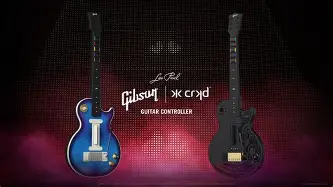
Conclusion: The Verdict After Four MonthsAfter testing for a full quarter of a year, my feelings on the Crkd Gibson Les Paul Guitar Controller have solidified. Is the hype justified? Mostly, yes—but with a few caveats. What I found was that Crkd didn't just rebuild a classic; they modernized it in ways that matter for performance while retaining the soul of what made the Les Paul the most popular shape in the history of the genre. In my experience, the shift to mechanical frets is the single most important factor. It elevates the playing experience from "managing old hardware" to "playing an instrument." I no longer feel like I am fighting the controller to get my inputs to register. The reliability of the whammy and the responsiveness of the strum bar have made it my daily driver, replacing an old Xplorer that I thought I would never put down. I was surprised by how much I ended up valuing the "weight" of the device, as it made my play sessions feel more anchored and deliberate. However, the disappointment regarding the glossy finish being a magnet for grime is real. It’s a small gripe, but for a premium product, it feels like a slight oversight in material choice. Similarly, the strum bar could use more texture. But these are small complaints when measured against the sheer mechanical superiority of the controller. I noticed that my overall enjoyment of the game increased because I was focused on the music rather than the gear. If you are a serious rhythm gamer looking for the "end-game" controller—something that combines the best of modern modding technology with the polish of an officially licensed product—the Crkd Gibson Les Paul is a fantastic achievement. It isn't cheap, and it isn't perfect, but it is the best mass-produced guitar controller ever released. After months of testing, I can confidently say that this has earned its permanent spot in my setup. It’s rare to find a peripheral that actually lives up to its premium branding, but Crkd has managed to strike that balance between luxury and utility. The hype is justified, provided you're ready to put in the work to master its professional-grade response. Discover Top-Rated Electronics on AmazonShop with confidence — see what thousands of buyers recommend. Shop Now on Amazon →
We are a participant in the Amazon Services LLC Associates Program, an affiliate advertising program designed to provide a means for us to earn fees by linking to Amazon.com and affiliated sites.
|
|---|