Difference Between Dell Chromebook 3120 and Ugreen Nasync Dh2300 Explained
The Dell Chromebook 3120 and the Ugreen Nasync Dh2300 occupy very different places in the computing ecosystem. One is a self-contained laptop built around Chrome OS for everyday tasks and classroom use; the other is a connectivity accessory that expands the ports and display options of an existing computer. Both are frequently considered by buyers who want simple, reliable setups—students and educators on one side, hybrid workers and small-office users on the other. This article unpacks the practical differences between the two, explains real-world use cases, and provides guidance for readers who must decide which product (or combination of the two) best meets their needs.
Quick overview: what each product is
Dell Chromebook 3120 is a compact Chromebook designed primarily for education and entry-level productivity. It is a complete mobile computer: display, keyboard, battery, and Chrome OS baked together to deliver an experience optimized for web apps, cloud storage, and simple offline tasks.
Ugreen Nasync Dh2300 is a docking/port-expansion device. It is not a standalone computer but rather a hub that connects to a laptop, tablet, or compatible device to provide additional display outputs, wired Ethernet, extra USB ports, and power delivery. It is intended to turn a thin, port-light device into a more desktop-like workstation.
Detailed product analysis
Dell Chromebook 3120 — design, software, and day-to-day use
The Dell Chromebook 3120 is best understood as a purpose-built low-cost laptop. Devices like this favor simplicity, durability, and long battery life over raw performance. Chrome OS drives the user experience: the interface centers on the Chrome browser, Progressive Web Apps, and Android apps where supported. That model reduces system maintenance—automatic updates and sandboxed apps keep the system relatively secure and easy to manage for non-technical users.
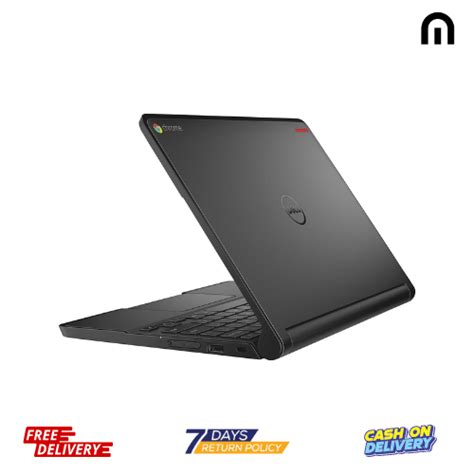
On the hardware side, education-focused Chromebooks are typically compact, with screens in the 11–12 inch range, spill-resistant keyboards, and reinforced chassis elements to survive classroom wear-and-tear. Storage tends to be modest because Chrome OS is cloud-centric; processors are entry-level, aimed at web browsing, document editing, video playback and light multitasking rather than demanding local computation.
Real-world use cases for the Dell Chromebook 3120 include classroom testing, note-taking, homework, web research, streaming video, and administrative tasks. For organizations deploying dozens or hundreds of devices, the Chromebook platform eases device management through policies and remote administration tools. For individuals who need a low-cost, low-maintenance laptop for email, streaming, and cloud productivity suites, a model like the 3120 is a pragmatic choice.
Find top-rated Laptops & Computers products at great prices.
Browse Now →Ugreen Nasync Dh2300 — connectivity, performance, and practical utility
The Ugreen Nasync Dh2300 demonstrates what modern docks do best: add stable, plug-and-play expandability to thin laptops and tablets. Typical features of docks in this class include dual external display outputs (HDMI/DisplayPort), gigabit Ethernet for reliable wired network access, multiple USB-A ports for peripherals, and USB-C host connectivity that supports DisplayPort Alt Mode and Power Delivery for charging the host device.
In daily use, the Dh2300 converts a travel-focused laptop with one or two ports into a full desktop environment—external monitors, wired keyboard and mouse, wired network, and a set of USB peripherals are all available through a single cable. This simplifies workstation setup and teardown and reduces cable clutter. For hybrid workers, designers who need extra screen real estate, or small meeting rooms that require quick laptop hookups, a dock like the Dh2300 is extremely practical.
Compatibility matters. Many docks work seamlessly with Windows and macOS systems that support USB-C Alt Mode and standard driver stacks. Chrome OS also supports…
Pros and cons
Dell Chromebook 3120
- Pros:
- Simple, secure, and low-maintenance operating system with automatic updates
- Lightweight and typically long battery life suitable for all-day classroom or travel use
- Durable build designed to handle everyday bumps and spills in education settings
- Affordable price for buyers focused on core web-based productivity
- Cons:
- Limited local storage and entry-level hardware restricts heavy multitasking and native software use
- Chrome OS limitations: not well suited for specialized professional software that requires Windows or macOS
- Lower-resolution or smaller screens on many budget education Chromebooks can be a constraint for extended productivity
Ugreen Nasync Dh2300
- Pros:
- Expands a laptop into a multi-monitor workstation with minimal fuss
- Centralizes network, power, and peripheral connections—ideal for hot-desk and hybrid setups
- Offers wired Ethernet for lower latency and more reliable network performance compared with Wi‑Fi
- Reduces cable switching—one cable connects or disconnects an entire desktop setup
- Cons:
- Requires a compatible host device—functionality depends on the laptop's support for USB-C Alt Mode and Power Delivery
- Not a substitute for a full computer—users still need a laptop or tablet to run applications
- Some advanced features may be limited on Chrome OS or older machines that lack modern USB-C standards
Comparison table
| Feature | Dell Chromebook 3120 | Ugreen Nasync Dh2300 |
|---|---|---|
| Category | Entry-level Chromebook laptop (complete device) | USB-C/USB docking hub (accessory) |
| Primary function | Portable computing for web apps, education, and cloud productivity | Expand ports, add monitors, wired networking and power delivery to a host |
| Operating system | Chrome OS (managed and secure) | None — depends on host OS (Windows, macOS, Chrome OS, Linux) |
| Portability | Self-contained and highly portable | Small and portable, but designed to remain on a desk or in a bag for docking |
| Typical buyers | Students, educators, budget-conscious buyers, basic users | Remote/hybrid workers, small offices, users who need multiple displays and wired LAN |
| Display support | Built-in display; external display support depends on available ports and adapters | Multiple external displays via HDMI/DisplayPort outputs (host-dependent) |
| Network | Wi‑Fi (and sometimes optional cellular in other Chromebook variants) | Gigabit Ethernet for stable wired networking |
| Power | Internal battery for untethered use | Power Delivery to charge the host laptop while docked (check host wattage needs) |
| Limitations | Less raw power, constrained storage, fewer native apps than other OSes | Dependent on host compatibility; not a standalone computer |
Real-world scenarios and who benefits most
Scenario: a school equipping students for web-based learning
For schools that need a fleet of low-cost, easy-to-manage devices, the Dell Chromebook 3120 aligns well with priorities: affordability, simple administration, and long battery life. Chromebooks integrate with many learning management systems, and the consistent Chrome OS updates simplify IT management. A dock like the Dh2300 is not necessary for most classroom scenarios where mobility and individual usage are important.
Scenario: a hybrid worker who wants a single-cable desk setup
In a home office or hot-desk environment, the Ugreen Dh2300 shines. A modern laptop is light and portable but often lacks the number of ports and monitor outputs needed for a comfortable desktop experience. The dock converts the laptop into a multi-monitor workstation and provides reliable wired networking—ideal for video calls, large spreadsheets, and multitasking. If the user already owns a Chromebook, they should verify the Chromebook’s compatibility with the dock for multi-monitor setups.

Scenario: a parent deciding between an inexpensive laptop and a docking accessory
If the decision is whether to buy an inexpensive laptop like the 3120 or a dock, the more practical approach is to think about the root need. If there is no existing laptop, a Chromebook provides an all-in-one solution. If a capable laptop already exists and the goal is to make it more productive at home, a dock is the right purchase.
Shop the latest Laptops & Computers picks on Amazon.
View Offers →Compatibility and practical considerations
Several practical questions influence whether each product will be a good fit:
- Does the host device support the dock? For the Dh2300, host compatibility matters. The host must support USB-C video output (DisplayPort Alt Mode) to drive external monitors, and must be able to accept power via USB-C if the dock is to charge the laptop. On Chromebooks, the specific OS version and hardware can affect multi-monitor behavior; checking manufacturer guidance or testing in-store is recommended when possible.
- Are required apps available on Chrome OS? Buyers considering a Chromebook should confirm that the critical applications are available as web apps, Android apps, or Progressive Web Apps. Heavy-duty professional software (e.g., certain creative or engineering tools) may not be available on Chrome OS.
- Network needs: When low latency and stability are priorities (video conferencing, remote desktop, online testing), wired Ethernet via a dock can be preferable to Wi‑Fi—this is where a dock provides clear value.
- Service and lifecycle: Chromebooks receive automatic OS updates for a defined support window. Schools and enterprises should verify the Auto Update Expiration (AUE) date for specific Chromebook models when planning multi-year deployments.
Buying guide: how to choose between (or combine) these products
When selecting between a Chromebook like the Dell Chromebook 3120 and a dock such as the Ugreen Nasync Dh2300, buyers should structure their decision around primary tasks, existing equipment, and priorities.
Questions to guide the purchase
- Does the buyer already own a laptop? If yes, a dock may be the fastest way to improve productivity. If not, a Chromebook provides a complete computer at low cost.
- What are the primary tasks? If tasks are web-based—email, browsing, streaming, document editing—Chromebooks are an efficient, low-maintenance choice. If tasks require multiple external displays, wired LAN, or many USB peripherals, a dock becomes essential.
- Is software compatibility a concern? Confirm that critical applications run on Chrome OS or have suitable web/Android equivalents. For specialized Windows/macOS applications, a dock must be paired with a compatible host machine.
- Is portability more important than expandability? Chromebooks excel at portability and battery life; docks excel at expandability while the host is on a desk.
- What is the intended lifespan and support requirement? For schools purchasing at scale, long support windows and easy manageability are important. For business users, warranty and support for the dock and host laptop should be considered.
Checklist of must-have features
- For a Chromebook: verify the Auto Update Expiration (AUE) date, battery life estimates under typical workloads, keyboard comfort, camera and microphone quality for video calls, and warranty/education bundle options if buying at scale.
- For a dock: verify host compatibility (USB-C Alt Mode and PD), the number and type of external display outputs (and supported resolutions/refresh rates), Ethernet speed, available USB ports, and the physical size/form factor for desk placement.
- For combined purchases: ensure the dock provides enough power to charge the chosen laptop while driving desired peripherals and displays; confirm the laptop has a USB-C port with the right capabilities.
Practical tips for setup and daily use
- Chromebook deployment: Use cloud-based profiles and Google Admin console features for schools and organizations to simplify setup. Encourage users to rely on cloud storage to mitigate limited onboard storage.
- Dock setup: Connect the dock to a single USB-C cable and route peripherals to the dock. Label ports or use a simple diagram to help users reconnect when returning to a hot desk.
- Troubleshooting: If displays do not appear when using a dock, check cable seating, confirm the host supports display output over the connected port, update the host OS, and try a different cable or port on the dock.
- Security and firmware: Keep the Chromebook OS updated and check for any firmware updates for docking stations; vendors occasionally release updates to improve compatibility and stability.
Conclusion
The Dell Chromebook 3120 and the Ugreen Nasync Dh2300 serve different, complementary needs. The Chromebook is a ready-to-go, low-cost computer optimized for web-first workflows and managed deployments—an attractive option for students, educators, and users who prioritize simplicity and portability. The Ugreen Dh2300 is a productivity multiplier: a dock that enlarges a host device’s capabilities by adding displays, Ethernet, and peripheral ports, ideal for hybrid workers and small workspaces.
The right choice depends on context. If a full, standalone device is required, a Chromebook is the natural pick. If the priority is to transform an existing thin-and-light laptop into a desktop workstation with a single-cable connection, a dock is the appropriate investment. In many cases, both products are complementary: a Chromebook for mobility and a dock for desktop productivity when a compatible Chromebook or laptop is used at a fixed workstation. Careful attention to compatibility—particularly host support for USB-C video and power delivery—and to the intended workflows will ensure the selected device or combination of devices meets real-world needs effectively.