Head-to-Head: Sjcam C400 vs Viltrox Af 28Mm F 4 5 (Detailed Comparison)
In the ever-evolving landscape of digital imaging, the lines between different categories of gear often blur as manufacturers push the boundaries of portability and specialized functionality. On one hand, we have the action camera market, which has transitioned from being a niche tool for extreme sports enthusiasts to a versatile companion for vloggers and casual travelers. On the other, the lens market is seeing a resurgence of "pancake" optics designed to make full-frame photography as unobtrusive as possible. This comparison takes a deep dive into two very different ways to capture the world: the Sjcam C400 action camera and the Viltrox AF 28mm f/4.5 "Chip" lens. While they represent different hardware categories, they both target the "everyday carry" (EDC) enthusiast who prioritizes size without wanting to sacrifice modern autofocus and high-resolution output.
The Sjcam C400 represents a significant leap for a brand known for value, offering high-resolution video and a robust build designed for rugged environments. Conversely, the Viltrox AF 28mm f/4.5 is a marvel of optical engineering that turns a bulky mirrorless camera into something that can almost slide into a jacket pocket. Choosing between these two setups requires an understanding of your primary shooting environment. Are you looking for a standalone device that can survive a dip in the ocean, or are you looking to transform your existing professional camera body into a streamlined street photography machine? This article breaks down the nuances of each product to help buyers decide which tool fits their specific creative workflow.
The Sjcam C400: A Powerhouse for the Action Enthusiast
The Sjcam C400 is positioned as a flagship-tier action camera that seeks to compete with the industry's most established names. At its core, it features a high-performance sensor capable of recording 4K video at high frame rates, which is essential for capturing the fluidity of fast-moving subjects. One of the standout features of the C400 is its integrated stabilization system. In the world of action cameras, raw resolution means very little if the footage is unwatchable due to camera shake. The C400 utilizes advanced electronic image stabilization (EIS) to smooth out jitters from mountain biking, running, or handheld vlogging.
The build quality of the C400 is designed for durability. It features a ruggedized exterior that offers a level of shock resistance rarely found in traditional cameras. For those who enjoy underwater photography or snorkeling, the C400 typically includes or is compatible with housing that allows it to descend to impressive depths. However, even without a case, the device is built to handle dust, light rain, and the general rigors of outdoor life. The dual-screen design is another major selling point, providing a front-facing display that is invaluable for vloggers who need to frame themselves accurately while speaking to the camera.
Software-wise, Sjcam has made strides in making the user interface more intuitive. The touch-responsive rear screen allows for quick setting changes, and the companion mobile app facilitates easy transfer of files for social media sharing. For the user who wants a "set it and forget it" experience, the C400 offers various automated modes, including time-lapse, slow motion, and burst photo, making it a versatile tool for creative storytelling without the need for extensive manual tinkering.
The Viltrox AF 28mm f/4.5: The Ultimate Minimalist Lens
Shaping the other side of this comparison is the Viltrox AF 28mm f/4.5. This is not a standalone camera but a "pancake" lens designed for full-frame mirrorless systems. Its primary appeal is its incredibly slim profile. Often referred to as a "body cap lens" with autofocus, it is designed for photographers who find themselves leaving their large, heavy glass at home. The 28mm focal length is a classic choice for street photography, environmental portraits, and architecture, offering a wide enough field of view to capture the scene without the extreme distortion found in ultra-wide optics.
The focal ratio of f/4.5 might seem conservative to those used to f/1.8 or f/2.8 primes, but it is a necessary trade-off for the lens's diminutive size. In daylight or well-lit environments, f/4.5 provides plenty of light for sharp, clean images. Furthermore, when used on a full-frame sensor, the 28mm f/4.5 can still produce a pleasing level of background separation if the subject is close to the lens. The autofocus performance is surprisingly snappy for such a small unit, utilizing a VCM (Voice Coil Motor) that ensures quiet and accurate focusing, which is a significant advantage for those who also want to use the lens for video work.
What makes the Viltrox AF 28mm f/4.5 unique is its "Chip" designation or its ultra-thin construction. It lacks a traditional manual focus ring in many iterations, leaning heavily on the camera's internal AF systems. This reinforces the "point and shoot" philosophy of the lens. It is built for the photographer who wants to capture life as it happens, treating their high-end mirrorless camera with the spontaneity of a film-era compact camera. The optical construction usually involves several specialized elements to keep chromatic aberration and distortion in check, ensuring that despite its toy-like size, the image quality remains professional.
Looking for the best Cameras & Photography deals on Amazon?
See Deals →Detailed Comparison: Specs and Real-World Usage
When comparing these two, we are essentially comparing an all-in-one ecosystem (Sjcam) against a specialized component (Viltrox). The Sjcam C400 excels in versatility of environment. You can mount it to a helmet, a car dashboard, or a chest harness. The Viltrox 28mm, however, excels in image aesthetic and sensor utilization. Because the Viltrox sits on a full-frame or APS-C mirrorless sensor, the dynamic range and low-light performance will almost always exceed what the Sjcam can produce, simply due to the physical size of the sensor behind the glass.
However, the Viltrox setup is fragile by comparison. You wouldn't take a Sony or Nikon body with a Viltrox lens surfing or zip-lining. The Sjcam is the tool for the "how" of the action, while the Viltrox is the tool for the "feeling" of the moment. In street photography, the Viltrox 28mm is a stealth champion. It doesn't scream "professional photographer," allowing for candid shots that might be impossible with a larger lens. The Sjcam is also discreet but is often perceived as a "video device," which causes a different reaction in public spaces.
| Feature | Sjcam C400 | Viltrox AF 28mm f/4.5 |
|---|---|---|
| Device Type | Standalone Action Camera | Full-Frame Pancake Lens |
| Primary Use | Action, Vlogging, Sports | Street, Travel, Everyday Carry |
| Sensor/Format | Small CMOS (Integrated) | Full-Frame (Depends on Camera) |
| Autofocus | Fixed Focus/Contrast-Based | VCM Autofocus System |
| Durability | Waterproof/Shockproof (With Care) | Standard (Requires Weather-Sealed Body) |
| Video Capability | 4K Up to 60FPS (High Refresh) | Dependent on Host Camera |
| Weight/Portability | Lightweight, Pocketable | Ultra-Thin, Makes Camera Pocketable |
Pros and Cons of the Sjcam C400
- Pros:
- Highly portable and requires no additional lenses or accessories to function.
- Double-screen design makes it one of the best value options for self-recording and vlogging.
- Impressive built-in stabilization that rivals more expensive brands.
- Rugged construction and waterproof capabilities make it the obvious choice for outdoor adventures.
- Wide-angle lens ensures you never miss a piece of the action in tight spaces.
- Cons:
- Small sensor limits performance in low-light and high-contrast scenarios compared to mirrorless systems.
- Fixed aperture and focal length mean less creative control over depth of field.
- Battery life can be short when recording at maximum 4K settings.
Pros and Cons of the Viltrox AF 28mm f/4.5
- Pros:
- Incredible "pancake" form factor that transforms the footprint of a full-frame camera.
- Fast and silent autofocus makes it excellent for both street photography and video.
- Sharp center performance with a classic 28mm look that is very flattering for environmental shots.
- Directly leverages the power, color science, and dynamic range of high-end camera sensors.
- Affordable entry point for those wanting to experiment with minimalist prime lenses.
- Cons:
- The f/4.5 maximum aperture is slow for nighttime photography or heavy background blur.
- Limited physical controls; often lacks a focus ring or AF/MF switch on the barrel.
- Fixed 28mm focal length requires the photographer to "zoom with their feet."
The Buying Guide: Which One Should You Choose?
Choosing between these two depends largely on whether you already own a mirrorless camera and what your intended "mission" is. If you are starting from scratch and want a device that can do everything from recording your morning run to capturing family vacations on a beach, the Sjcam C400 is the better investment. It is a complete solution that handles the audio, video, and stabilization in one package. It is also the superior tool for high-intensity situations where you might drop the camera or expose it to the elements. Buyers who prioritize vlogging and extreme sports will find the C400's wide-angle perspective and ruggedness indispensable.
On the other hand, if you are a dedicated photographer who already owns a Sony E-mount or similar mirrorless body, the Viltrox AF 28mm f/4.5 is a tactical addit…
Consider your output as well. If your primary goal is 60-second vertical clips for social media with lots of movement, the Sjcam’s internal processing and stabilization will save you hours of work. If your goal is to produce high-resolution stills for printing or cinematic, shallow-focus video (leveraging your camera's full-frame sensor), the Viltrox lens is the way to go. You are essentially choosing between the "action" of the Sjcam and the "art" of the Viltrox setup.
Use Case Analysis: Real-World Scenarios
To better understand these products, let’s look at three common scenarios. In a travel/backpacking scenario, the Sjcam C400 is often the secondary camera. It’s clipped to a backpack strap to record the hike. However, for some, it is the primary camera because it weighs almost nothing and can be submerged in a mountain lake. The Viltrox 28mm in this same scenario is for the "blue hour." When the sun starts to set and you're walking through a historic town, the Viltrox on a mirrorless body will capture the nuances of the light better than any action camera could, providing a more "organic" feel to the images.

In a vlogging scenario, the Sjcam C400 wins on ergonomics. The front-facing screen is a game changer for framing. While many mirrorless cameras have flip-out screens that work with the Viltrox lens, the resulting setup is still significantly heavier and more conspicuous. If you are vlogging in a busy city, the Sjcam looks like a toy and attracts less attention, whereas even a small mirrorless camera looks like "gear." Setting the Sjcam to a high bitrate and using its internal EIS allows for a walk-and-talk style that is very popular today.
Looking for the best Cameras & Photography deals on Amazon?
Shop Amazon →Finally, in a family and lifestyle scenario, the Viltrox AF 28mm f/4.5 often produces the images that end up in the photo album. The 28mm focal length is perfect for capturing kids playing or a dinner party. It feels natural and human. The Sjcam, while great for the pool or a bike ride, produces a "fisheye" or ultra-wide look that can feel a bit distorted for intimate portraits. The Viltrox allows the user to benefit from the superior face and eye-tracking autofocus found in modern mirrorless cameras, ensuring that every family moment is tack-sharp.
Technical Deep Dive: Sensor Size vs. Lens Optimization
A frequent point of confusion for buyers is why a "slow" f/4.5 lens on a big camera can sometimes perform better than a "fast" f/2.8 lens on an action camera. This comes down to the physics of light gathering. The sensor inside the Sjcam C400 is small, which allows the camera to be tiny and keep everything in focus (deep depth of field). However, a small sensor has small pixels (photosites), which are more prone to digital noise when the light fades. This is why action camera footage often looks "muddy" or "grainy" indoors.
The Viltrox 28mm f/4.5, by contrast, spends its time projecting light onto a massive full-frame sensor. Even at f/4.5, that sensor is catching significantly more total light than the Sjcam's sensor. This results in cleaner shadows, better color transitions, and the ability to crop into the image later without it falling apart. However, the trade-off is that the Viltrox has a much thinner "plane of focus." If you are moving fast, the autofocus has to work hard to keep you sharp. The Sjcam avoids this by having a lens design where almost everything from a foot away to infinity is naturally in focus.
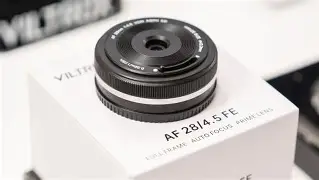
From an engineering standpoint, the Viltrox lens is a triumph of miniaturization. To get autofocus motors, glass elements, and electronic communication pins into a housing that is less than an inch thick is a feat. They use ED (Extra-low Dispersion) glass elements to ensure that even though the lens is thin, it doesn't suffer from the "smeary" edges often seen in cheap body cap lenses. Sjcam, on the other hand, focuses its engineering on the "pipeline"—how the data moves from the sensor to the SD card, ensuring that the 4K video is processed with enough sharpening and color vibrance to look good right out of the camera.
Conclusion
The comparison between the Sjcam C400 and the Viltrox AF 28mm f/4.5 highlights the two different paths modern imaging has taken. The Sjcam C400 is the ultimate tool for the "active" creator—someone who needs a camera that can keep up with their physical movement, withstand the elements, and provide stabilized, high-resolution video with zero fuss. It is a standalone rugged companion that excels in environments where traditional cameras fear to tread. For the athlete, the traveler, and the casual vlogger, it offers a level of utility that is hard to beat for the price.
Meanwhile, the Viltrox AF 28mm f/4.5 is for the "intentional" creator who wants to bring professional-grade sensor performance into their everyday life. It is an elegant solution to the problem of camera bulk, offering a "stealth" way to shoot high-quality street photography and travel vignettes. While it lacks the ruggedness and standalone nature of the Sjcam, it rewards the user with the superior aesthetic of a large sensor and the precision of modern autofocus. Ultimately, the Sjcam C400 is about capturing the event, while the Viltrox 28mm is about capturing the atmosphere.