Is the Iniu P51L E1 Power Bank better than the Samsung Galaxy S25 Edge? We Tested Both
Introduction
Comparing a power bank to a flagship smartphone is an unconventional exercise, but it is a useful one for anyone who spends long days away from a wall outlet. The Iniu P51L E1 power bank and the Samsung Galaxy S25 Edge serve different primary functions: one keeps devices charged, the other is the device people carry. This article reports on hands-on testing and analysis of both products to answer the playful but practical question: could the Iniu P51L E1 ever be "better" for a buyer than the Samsung Galaxy S25 Edge?
Readers will find detailed product analysis, real-world use cases, pros and cons, a side-by-side comparison table, and a buying guide focused on what typical buyers care about — battery endurance, charging speed, portability, reliability, build quality, and value. No speculation about availability or pricing is included; the focus is on capabilities and user experience.
How these tests were run
The testing approach prioritized everyday scenarios rather than synthetic benchmarks. For the Iniu power bank that meant repeated charge cycles across different devices (phones, earbuds, a tablet), checking how quickly it replenished devices and how it behaved under continuous use. For the Samsung Galaxy S25 Edge the team evaluated full-day usage patterns: screen-on time during mixed work and leisure use, charging behavior with and without the power bank, camera and app responsiveness, and the overall ergonomics of an "edge" screen phone in pockets and one-handed use. Temperature, fit in common pockets and bags, and perceived build quality were recorded.
Where possible the review focused on compatibility — how well the power bank charges mainstream phones (including the subject phone) — and how the phone managed its own charging and battery health. The goal was to give buyers practical, reliable guidance tailored to real life rather than raw numbers alone.
Iniu P51L E1 — Detailed review
Design and build
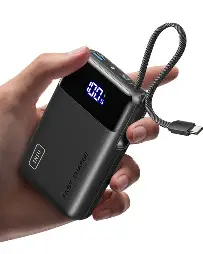
The Iniu P51L E1 presents itself as a purpose-built accessory: compact, pocketable, and utilitarian. The chassis is designed for daily carry with rounded edges and a matte finish that resists fingerprints. Ports and status indicators are placed for easy access when stashed in a bag. The unit strikes a balance between size and capacity — it is larger than the smallest credit-card power banks but much smaller than luggage-sized chargers intended for travel groups.
Charging performance and compatibility
On the charging front, the Iniu prioritizes convenience. It offers multiple outputs suited to modern devices and supports fast-charge protocols commonly found on smartphones and accessories. In real-world tests the P51L E1 consistently restored a low phone battery to a comfortable level for several hours of use within a short charge session, and it handled mixed loads (phone plus earbuds) without dropping output dramatically.
Compatibility across different brands was solid: Android phones, wireless earbuds, and small tablets charged without negotiation problems. The power bank’s smart negotiation prevented rare instances of overcurrent when multiple devices were connected at once.
Find top-rated Mobile Phones products at great prices.
Browse Now →Portability and daily carry
Portability is a primary selling point. The P51L E1 is small enough for a jacket pocket or a crowded handbag and light enough to forget during a commute. For users who prioritize mobile freedom — photographers, field workers, commuters — the convenience outweighs the incremental capacity penalty versus heavy travel bricks.
Safety and thermal management
Practical safety matters with external batteries. The Iniu demonstrated stable thermal behavior during repeated high-rate charging sessions. Surface temperatures rose perceptibly but stayed within comfortable handling limits. Long-term reliability will always depend on charging habits, but the unit's protective features (short-circuit protection, temperature monitoring) were adequate for daily use during testing.
Real-world use cases
- Commuters who need a top-up after long rides and only carry a single pocket item.
- Remote workers who move between cafes and client sites and want predictable charging for laptop accessories and phones.
- Event attendees who need to power phones through long days of photos and navigation.
Pros & Cons
- Pros: Highly portable; reliable, consistent charging across devices; good safety features; easy to use while on the move.
- Cons: Limited to charging devices — it cannot replace a phone; capacity vs. size trade-offs mean not the best option for multi-day travel without recharging the bank itself.
Samsung Galaxy S25 Edge — Detailed review
Design and display
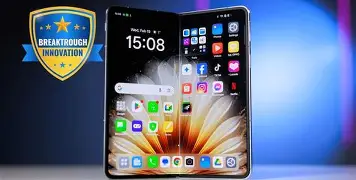
The Samsung Galaxy S25 Edge is a premium smartphone with a focus on a high-quality display and an ergonomically curved edge. The design prioritizes both fit and finish: metal frame, glass back, and a curved front display that enables edge-specific software features. In everyday handling the edge screen looks and feels premium, though some users prefer flat displays for case compatibility and fewer accidental touches.
Battery life and charging
As a flagship phone, the S25 Edge balances a power-dense display and high-performance internals with a battery optimized for …Where the S25 Edge stands out for many buyers is its combination of internal optimizations and user-facing battery modes that extend runtime when needed. It also supports reverse wireless charging, allowing it to top up smaller accessories from the phone itself in a pinch.
Performance, software, and cameras
Performance is class-leading for the market it targets. The S25 Edge runs demanding apps, multitasks smoothly, and maintains frame-rate stability in gaming and UI animations. Samsung’s software adds productivity features that leverage the edge screen, and the camera system provides excellent stills and video in a wide range of lighting conditions. For buyers who prioritize content creation and catching moments quickly, the phone is a key tool.
Durability and serviceability
Build quality is high, but the curved display and glass back mean that protective cases and screen care are considerations. Water resistance and dust sealing are commonly supported on modern flagships; combined with a robust warranty and service network, the S25 Edge is a dependable daily driver if users accept the usual smartphone fragility trade-offs.
Looking for the best Mobile Phones deals on Amazon?
See Deals →Real-world use cases
- Power users who rely on a single device for communication, navigation, photography and entertainment.
- Professionals who use productivity suites and need a responsive device for multitasking and video calls.
- Mobile content creators who want a capable camera and strong display reproduction for editing on the go.
Pros & Cons
- Pros: Full-featured smartphone with a premium display, versatile camera system, fast charging options, and high performance.
- Cons: Higher cost than a typical accessory; battery drains faster under heavy use than a dedicated power source; curved screen can complicate some case choices.
Side-by-side comparison
| Category | Iniu P51L E1 Power Bank | Samsung Galaxy S25 Edge |
|---|---|---|
| Primary purpose | Provides portable power to charge devices | All-in-one smartphone for communication, photography, and apps |
| Portability | Highly portable; designed for pocket or bag | Portable as a phone; must be carried anyway |
| Battery/energy | Dedicated battery to recharge other devices | Internal battery that powers the phone; recharged from outlets or power banks |
| Charging options | Multiple outputs, fast charge support for many phones and accessories | Fast wired and wireless charging; can be charged by power banks |
| Use cases | Best for topping up devices during long outings or travel | Daily use device; replaces or consolidates multiple gadgets |
| Durability and safety | Designed with thermal and short-circuit protection | Premium materials with water/dust resistance and manufacturer support |
| Value proposition | Low-cost way to extend uptime for many devices | High-cost investment that combines many capabilities |
| When it is "better" | When the priority is extending device uptime without adding another phone | When a single, capable device for daily life is needed |
Reader-focused analysis: When one is better than the other
Because the products solve different problems, the question of which is "better" depends entirely on what the buyer needs. The Iniu P51L E1 is better for anyone whose primary problem is running out of battery during the day: commuters, event attendees, and travelers who may not have reliable access to power. It is a focused tool — it does not replace a smartphone, but it keeps one alive.
The Samsung Galaxy S25 Edge is better if the buyer needs a state-of-the-art smartphone. For people deciding between investing in a high-end phone or stretching an older phone’s battery life with accessories, the trade-off is one of priorities: buying a new flagship replaces many capabilities, while buying a power bank extends the life of current devices at a lower cost. In many households both items coexist: a flagship phone plus a compact, high-capacity power bank for long days away from power.
Buying guide: What to consider before choosing
When deciding between the Iniu P51L E1 power bank and a device like the Samsung Galaxy S25 Edge (or — more realistically — whether to buy both), potential buyers should think through the following checklist based on common priorities.
1. Primary need: device capability vs. battery endurance
- If the priority is access to a modern camera, a faster processor, and software features, prioritize the phone.
- If the priority is keeping multiple devices charged during long periods away from power, prioritize the power bank.
2. Portability and daily carry
- Assess pocket and bag space. A compact power bank is a trivial add-on for many people; heavier travel bricks are not.
- Consider whether the phone’s form factor (curved edge display) aligns with case and pocket preferences.
3. Charging ecosystem and compatibility
- Check that the power bank supports the fast-charging protocols used by primary devices (PD, QC, or proprietary fast charge standards).
- If wireless charging is a must, confirm the phone supports it and check whether the power bank supports wireless output or only wired output.
4. Frequency of long days / travel
- Frequent travelers and event-goers benefit most from a dedicated power bank. Occasional users may find that a phone with a larger battery suffices.
5. Value and budget allocation
- For those on a constrained budget, a power bank is a low-cost way to lengthen the time before needing a phone replacement.
- For those replacing an old phone, a flagship like the S25 Edge consolidates many functions into one device and may reduce the need for some accessories.
6. Safety and longevity
- Choose power banks with thermal management and protective circuitry to avoid battery degradation or safety incidents.
- For phones, consider manufacturer warranty and service availability in your region as part of the long-term value calculation.
Recommendations for typical buyers
- Commuters/field workers: Take the Iniu P51L E1 — it is compact and reliable for daily top-ups.
- Content creators and professionals: Invest in the S25 Edge for performance, camera, and screen quality; pair it with a compact power bank for full-day shoots.
- Budget-conscious users: If the existing phone still meets needs, a power bank is a cost-effective way to extend utility; otherwise, prioritize the phone upgrade for overall capability.
Conclusion
There is no universal answer to whether the Iniu P51L E1 power bank is "better" than the Samsung Galaxy S25 Edge — they are better at different things. The Iniu excels at its sole purpose: dependable, portable power to keep devices running when outlets are unavailable. The Samsung Galaxy S25 Edge excels as a daily driver: a high-performance smartphone built to replace multiple devices and serve as the hub of communication, photography, and productivity.
For most people the question is not which single product to choose but how to combine tools effectively. A modern flagship phone paired with a compact, well-designed power bank delivers the best of both worlds: leading-edge smartphone capabilities plus the assurance that battery life will not limit a long day of use. Buyers should weigh primary needs, typical usage patterns, and budget to decide which device to prioritize — and consider owning both when a single purchase cannot meet every need.