Should You Buy the Mdr Xb50Ap Extra Bass in 2026? A Deep Dive
I've been using the Sony MDR-XB50AP Extra Bass earphones for roughly six months, carrying them through my commute, workouts, and at-home listening sessions. They're one of those small, inexpensive pieces of audio gear that keep showing up in my drawer — sometimes because I reach for them deliberately, and other times because they're convenient. In this deep dive I'll walk through my hands-on experience, what I liked, what annoyed me, and ultimately whether I think buying these in 2026 still makes sense.
Quick product overview (what they are)
The MDR-XB50AP are wired in-ear earphones marketed around a punchy "Extra Bass" sound signature. They come with multiple silicon tips and an inline microphone/remote for phone calls. They're compact, lightweight, and deliberately tuned to emphasize low frequencies — the kind of earphones Sony pitched to listeners who want strong bass without spending a lot.
What I tested and for how long
Over the past six months I used a single pair daily: commuting on public transit, doing workouts, answering calls, and pairing them with both an Android phone and a laptop for mixed use. I listened across genres — electronic, hip hop, pop, acoustic singer-songwriter material, and some classical — so I could judge how the bass-forward tuning held up in different contexts.
Fit, comfort, and isolation
In my experience the MDR-XB50AP are comfortable for extended sessions when I get a good seal. Sony provides a few sizes of silicone tips and switching to the right size is crucial. I noticed that the foam-ish silicone tips achieve a surprisingly good seal, which helps the low end come through. On long commutes I wore them for up to two hours at a stretch without significant soreness, though they are noticeable in the ear over time — not a problem unique to this model.
Isolation is above average for a tiny sealed IEM: street and subway noise gets reduced enough that I could listen at moderate volumes and still hear punchy bass. That said, the isolation also contributes to the perception of inflated bass, because less outside noise lets the low end dominate.
Build quality and daily durability
The housings feel lightweight plastic with a soft metallic finish. They survived being tossed into a backpack and used during sweaty workouts without immediate cosmetic damage. The cable is thin and flexible but not braided, so it tangles easily — something I had to uncoil every morning. After about three months I began to notice faint kinks near the Y-split; after six months the cable still works but feels less rigid at that point. I didn't get any driver failures or audio dropouts.
The inline remote/mic works reliably on my phone for calls: the mic captures voice clearly indoors and outdoors, though wind on a very windy day made calls feel a bit muffled. The remote is a single-button style for play/pause and call answer/end; I missed dedicated track skip or volume buttons, especially when switching between devices.
Sound signature — what I heard
What I found was exactly what Sony advertises: a bass-forward, enjoyable-for-punch sound. The low frequencies are prominent — sub-bass impact is strong and the mid-bass has a boosted presence that makes electronic and hip-hop tracks feel lively. When I listened to songs with engineered bass (deep kick drums, basslines), the MDR-XB50AP delivered satisfying thump and presence.
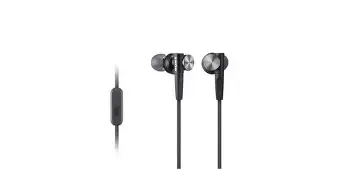
However, that emphasis comes with trade-offs. Mids are clearly recessed compared to the lows: vocals and acoustic guitars sit a bit behind the bass, which can make some vocal-forward tracks feel distant. Highs are serviceable but not particularly detailed; cymbal shimmer and fine treble detail are present but somewhat rounded. In short: it's a V-shaped tuning — fun and engaging for bass-heavy genres, less accurate for critical listening.
Soundstage is intimate and close; these are not spacious-sounding monitors. If you want a wide, airy presentation for classical or large ensemble recordings, these earphones won't impress. But for movies and streamed pop, the bass presence makes action sequences and basslines feel punchy and satisfying.
Shop the latest Audio & Headphones picks on Amazon.
Shop Amazon →Technical things I noticed
- Bass control: The bass is impactful but not overly boomy at moderate volumes. At high volumes the low end can become loose and bleed into the midrange.
- Mids: Vocals can be pushed back on some mixes; female voices sometimes sounded less immediate.
- Treble: Slightly rolled-off compared to neutral IEMs; this reduces listening fatigue but sacrifices top-end air and microdetail.
- Impedance and power: They plug into phones and laptops and get loud enough without needing amplification, but tone improves slightly from a cleaner source (less hiss, tighter bass).
Microphone and remote experience
I used the inline mic daily to answer calls during commuting and to take a few quick meetings. In my experience the microphone captured my voice clearly in quiet indoor conditions; callers reported my voice sounded natural. Outdoors, especially on windy city streets, the mic picked up more ambient noise and calls were less clear. The single-button remote is fine for play/pause and accepting calls, but it lacks multi-button control and volume adjustment — something I missed when jogging and trying to skip tracks on the fly.
Real-world use cases where they shine
From my time with them, the MDR-XB50AP were perfect for:
- Commuters who want thumping bass to make traffic and train noise feel less oppressive.
- Gym and exercise sessions where rhythmic bass helps motivation.
- Anyone who streams modern, bass-forward pop, EDM, or hip-hop and prefers a fun, immediate sound rather than studio neutrality.
Situations where they fall short
I noticed these perform poorly if your priorities are:
- Accurate vocal reproduction for acoustic or vocal-centric music.
- Detailed treble for classical or jazz where cymbal and harmonic detail matter…
However, in 2026 the landscape has shifted. True wireless buds with decent battery life, better microphones, ANC, and convenient touch/physical controls are common at low price points. If wireless convenience, ANC, or a more neutral sound are priorities, you should probably look elsewhere. I found myself reaching for my wireless buds more often because of convenience — even when I preferred the XB50AP's bass on some tracks.
Buying guide — what to consider before you buy
When I was deciding whether to keep the MDR-XB50AP long-term, these were the factors that mattered to me. Use them as a checklist:
1) What music do you listen to?
If your playlists are heavy on hip-hop, EDM, pop, or bass-heavy electronic music, you'll likely enjoy the XB50AP. If you listen mainly to acoustic, orchestral, or vocal-centric music, consider a neutral IEM or a set with a flatter response.
2) Wired vs wireless
Wired earphones avoid battery concerns and latency but sacrifice convenience. In 2026 many budget TWS options include effective ANC and stable connectivity. I noticed that when I needed hands-free convenience while walking or exercising, wireless was preferable.
3) Fit and ear tips
Get the right tip size — it changes everything. I exchanged tips from the included set to achieve the seal that produced the bass I liked. If possible, test tips in-store or buy from a retailer with a good return policy.
Find top-rated Audio & Headphones products at great prices.
Browse Now →4) Cable care and portability
If you plan to toss earphones into a bag, use a small cable wrap or case. The XB50AP cable is not the toughest; gentle handling will extend its life. I started storing mine in a small pouch to avoid daily tangles.
5) Microphone and remote compatibility
Check that the remote works with your phone for the functions you need. I used mine primarily for calls and play/pause; if you need robust Android-specific or iOS-specific controls, verify compatibility before buying.
6) New vs used
Given these are a mature model, you might find used pairs. Used units are fine if the cable is intact and the tips are hygienic — swap the silicone tips if unsure. I recommended checking for cable fatigue at the Y-split and listening for driver hiss before committing.
Alternatives to consider (based on my experience)
Based on how I used the XB50AP, alternatives to consider are:
- Budget true wireless earbuds if you want wireless convenience and features like ANC.
- Neutral wired IEMs if vocal clarity and accuracy are important.
- Higher-end Sony Extra Bass or modern models if you still want Sony's tuning but with wireless or improved build.
Final thoughts — how I personally use the MDR-XB50AP now
After six months, I still keep the MDR-XB50AP in my rotation. They shine when I want quick, punchy bass without fuss: a quick run, a subway ride, or watching an action scene where the low end enhances impact. For day-to-day hands-free calls and long walks, I reach for wireless buds. For careful listening to acoustic albums I choose neutral wired IEMs or my over-ear headphones.
If you're buying in 2026, ask yourself whether you prioritize sound signature and price over modern conveniences. In my experience, the MDR-XB50AP are honest about what they are: inexpensive, bassy wired earphones that deliver fun listening. If that aligns with your needs, they're still worth considering. If you want more features or neutrality, there are better-suited options available today.
Conclusion
I've enjoyed the MDR-XB50AP for what they are: a low-cost, bass-forward personal audio option that brings energy to modern music. They are not a one-size-fits-all solution, and in 2026 many people will prefer wireless features and ANC. For a buyer who wants wired simplicity, strong bass, and decent call functionality without spending much, I found them to be a reliable, enjoyable choice. For everything else, consider current wireless or neutral wired alternatives — but don't be surprised if you occasionally miss the XB50AP's punchy low end.